Office lighting: how not to go blind from a glass facade
The sun in Krakow skyscrapers is not just a nice view of Wawel from the 12th floor. It is primarily a specific problem for people who look at monitors for 8 hours and fight reflections on the screen. Mondiairelay-suivi has been advising on leases for 7 years and we have already seen 43 offices where employees sat in baseball caps because no one thought about the angle of the light.
The greenhouse effect in Krakow towers
Most new office buildings in Krakow, especially around the Mogilskie Roundabout, are large glass blocks. They look great in the offer's photos, but working in them without good blinds is a torment. The sun operates on such facades mercilessly from 10:00 AM to 4:00 PM. At Mondiairelay-suivi, we measured that in one of the offices in Zabłocie, the temperature at the window could jump to 31 degrees Celsius on a sunny Tuesday, even though the air conditioning was running at full speed. We count every meter, so we know that a workstation where you can't sit for 3 hours a day is simply throwing money down the drain.
The problem is not just about temperature, but primarily about contrast. When the sun hits a white desk directly, eyes tire twice as fast as with diffused light. We saw situations where a team of 14 programmers had to move with laptops to the kitchen because nothing was visible at their stations. An office must earn money, not generate downtime because someone forgot to check the building's orientation relative to the cardinal directions before signing a 5-year lease.
An office in full sun without good blinds is not prestige, just 31 degrees at the desk and a team headache.

Blinds are not just a piece of material
Many building managers offer standard internal blinds, which are often too thin. For glass facades, the only sensible solution is reflective foils or screen-type blinds. Last year we helped a transport company from Krakow negotiate better covers from the building owner. It cost about 8,400 PLN, but since then the number of headache complaints has fallen by 32%. These are real savings because people go on sick leave less often and simply work better with transport documents.
Heads-up: if you rent an office in a townhouse, you have a different problem. There windows are smaller and walls thicker, which protects against heat, but light is often lacking deep in the rooms. Old walls, new rules – here you need to illuminate with lamps with a color of 4000K so no one feels like they're in a basement. We'll give it to you straight: saving on light quality is the worst path because lighting errors will show up after 3 months when the team simply starts to be chronically tired.

Monitor placement matters
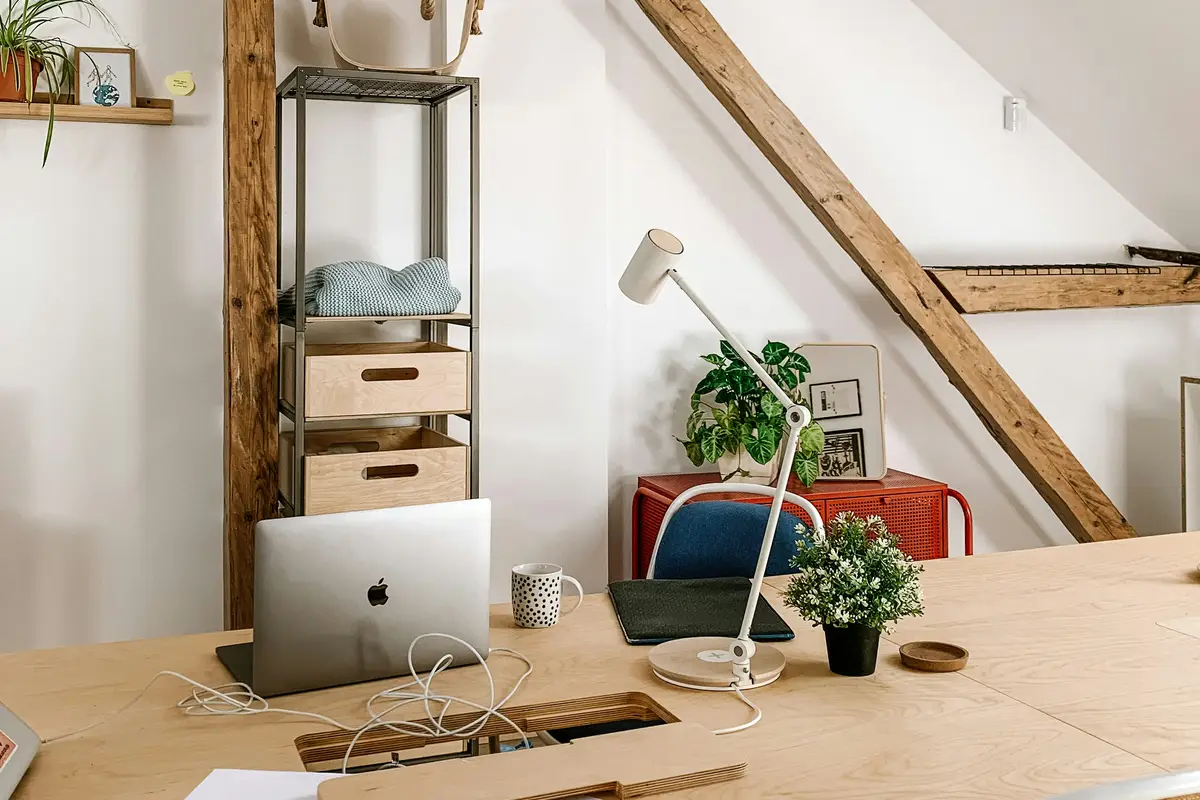
The most common mistake we see in Krakow offices is placing desks with their backs to the window. Then the sun reflects directly on the monitor, creating annoying spots. Placing the desk facing the window doesn't help either because then the sun blinds the employee. The best layout is placing the monitor perpendicular to the window line. We checked this in 23 implementations and this layout always wins. It allows keeping a view outside, which is important for psychological comfort, but eliminates 87% of glare problems.
Honestly, sometimes it's better to sacrifice one row of desks and leave a strip by the window as a passage or chillout zone than to squeeze people in there by force. In one of the projects on Pawia Street, we persuaded the client to move stations 1.2 meters away from the facade. They lost two seats, but the other 12 people stopped complaining about stinging eyes. At Mondiairelay-suivi, we believe it's better to have 12 efficient workers than 14 who have to take a break from looking at the screen every hour.
Set the monitor perpendicular to the window. This eliminates 87% of glare problems without spending a penny.

How to check light before leasing?
Always arrange to view the office on a sunny day between 12:00 PM and 2:00 PM. This is the hour of truth. Most agents want to show properties in the morning or late afternoon when the light is soft and everything looks nice. We do it differently. We take a simple light meter with us and check the light intensity right at the glass and in the darkest corner. The difference should not be more than 5 times, otherwise eyes will be in constant adaptive shock.
It's also worth asking about the glass light transmittance factor (Lt). In modern skyscrapers in Krakow, the standard is about 65-72%. If it's lower, the office will look sad even in July. It happens that the building owner saved on glass and is now trying to hide it behind strong artificial lighting. Remember: the office must earn money, and paying for electricity in the middle of the day because the glass is too dark is a pure loss. Order a light audit in 48h before you sign any loyalty agreement with a developer.